Human Fibronectin ELISA: A Crucial Tool for Cellular Adhesion and Tissue Repair Studies
Fibronectin, a glycoprotein, plays a critical role in cell adhesion, migration, wound healing, and tissue repair. It is a key component of the extracellular matrix (ECM) and is involved in numerous physiological processes such as embryonic development, hemostasis, and cancer progression. The Human Fibronectin ELISA is a highly sensitive and specific assay used to quantify fibronectin in various biological samples, including serum, plasma, and tissue extracts. This assay is essential in research areas like cardiovascular disease, cancer, and tissue engineering.
Importance of Fibronectin in Cellular Processes
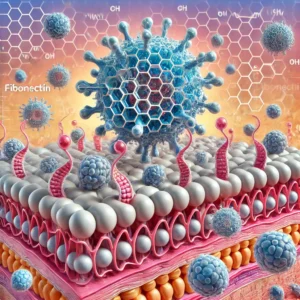
Fibronectin is crucial for cellular adhesion and acts as a bridge between cells and the extracellular matrix. It plays a key role in tissue regeneration, as its binding properties enable it to facilitate the healing of wounds by promoting cell migration and attachment. Detailed studies on fibronectin’s role in wound healing are available from NIH. Additionally, fibronectin is involved in tumor progression by promoting cancer cell migration and metastasis, as documented by the National Cancer Institute.
Features of Human Fibronectin ELISA
- High Sensitivity: This ELISA kit allows for the detection of very low levels of fibronectin, making it ideal for both basic research and clinical studies. The high sensitivity of the assay is crucial for accurately detecting early changes in fibronectin expression, which may signal disease onset. NIH’s resources provide more insights into sensitive assay development.
- Specificity: The assay shows minimal cross-reactivity with other ECM proteins, ensuring accurate results. This specificity is critical in cancer research, where precise quantification of fibronectin levels can provide insights into tumor invasion mechanisms. Learn more about assay specificity at FDA.gov.
- Broad Detection Range: The ELISA has a broad dynamic range, enabling accurate quantification of fibronectin levels in samples with varying concentrations. This flexibility makes it suitable for research on both normal and diseased tissues. The concept of dynamic range in assays is further explained by CDC’s laboratory resources.
Applications of Human Fibronectin ELISA
- Wound Healing and Tissue Repair: Fibronectin’s ability to promote cell migration and adhesion makes it a critical player in wound healing. Researchers are studying the fibronectin pathway to develop therapies that can accelerate tissue repair, as highlighted by NCBI.
- Cardiovascular Research: Fibronectin is involved in vascular integrity and is a biomarker for various cardiovascular conditions, including atherosclerosis and myocardial infarction. Elevated levels of fibronectin are associated with endothelial dysfunction, a key feature in cardiovascular diseases, as shown in this CDC study.
- Cancer Progression: Fibronectin promotes cancer cell migration and tumor invasion by facilitating the adhesion of cancer cells to the ECM. This property makes fibronectin a valuable target in cancer therapy. Research supported by NCI is investigating how targeting fibronectin could prevent metastasis.

How the Human Fibronectin ELISA Works
The sandwich ELISA format is used to detect fibronectin. Here’s how the assay works:
- Capture Antibody: The microplate is coated with an antibody that specifically binds to human fibronectin.
- Sample Addition: Biological samples are added to the wells, where fibronectin binds to the capture antibody.
- Detection Antibody: A detection antibody, linked to an enzyme, is introduced to detect the bound fibronectin, creating a colorimetric signal.
- Quantification: The intensity of the color change is proportional to the amount of fibronectin in the sample, which can be quantified using a microplate reader.
For more detailed protocols, see the ELISA guides from NIH.
Sample Types and Preparation
- Serum and Plasma: These are commonly used sample types for fibronectin quantification. Proper handling of these samples is critical for obtaining reliable results, as outlined in FDA’s clinical guidelines.
- Tissue Extracts: Tissue homogenates can be analyzed for fibronectin levels to study tissue regeneration and wound healing. Guidelines for sample preparation can be found at NIH.
Benefits of Using Human Fibronectin ELISA
- High Reproducibility: The Human Fibronectin ELISA provides reliable results across different sample types and experimental conditions. This reproducibility is essential in clinical research and biomarker discovery. More information on reproducibility in assays can be found at NIH’s reproducibility initiative.
- Minimal Cross-Reactivity: This ELISA shows minimal interference from other ECM proteins, ensuring that only fibronectin is detected in the sample. This selectivity is crucial for cancer and cardiovascular research, where accurate biomarker quantification is essential. For more on assay selectivity, visit FDA.
Conclusion
The Human Fibronectin ELISA is an indispensable tool for researchers studying cellular adhesion, wound healing, cancer progression, and vascular diseases. By offering high sensitivity, specificity, and reproducibility, this assay enables researchers to gain critical insights into the role of fibronectin in health and disease. For further reading on fibronectin-related research, explore resources from the National Institutes of Health, Centers for Disease Control and Prevention, and Food and Drug Administration.